
Basements That Add Space You Actually Use
Basement Finishing in Gillette for properties needing extra bedrooms, offices, entertainment areas, or storage without adding square footage above ground
Unfinished basements sit empty even though they represent hundreds of square feet of potential living area, and converting that space requires insulation, moisture control, framing, drywall, flooring, and systems that meet code requirements for habitable rooms. Basement finishing services from R & L Contractors include construction of entertainment spaces, bedrooms, offices, and family rooms designed around how homeowners will use the finished area long-term. Custom layouts account for existing mechanicals, ceiling heights, window locations, and egress requirements that vary depending on whether rooms will serve as sleeping areas. These projects increase usable living space and home value without the cost and disruption of adding above-grade square footage.
Insulation improvements reduce heat loss through foundation walls, and moisture-control measures address condensation and groundwater infiltration common in Wyoming basements where soil conditions and freeze-thaw cycles affect foundation performance. Framing creates walls and soffits that conceal ductwork, plumbing, and wiring while maintaining ceiling height where possible. Drywall, flooring, lighting, and storage installation complete the transformation from concrete and exposed joists to finished rooms that function as well as the main level.
Schedule a consultation to explore how basement finishing can transform unused space into functional living areas for your household.
What Code-Compliant Basement Renovation Involves
Basement bedrooms require egress windows large enough for emergency exit and rescue access, installed with window wells that provide unobstructed clearance and drainage to prevent water accumulation. Ceiling height must meet minimum standards in habitable rooms, which sometimes requires lowering floors or selecting smaller duct profiles to preserve headroom. Electrical circuits are added for lighting, outlets, and any equipment the finished space will include, with arc-fault protection required in sleeping areas. Smoke and carbon monoxide detectors are installed per code, and HVAC systems are evaluated to confirm that existing equipment has capacity to condition the additional square footage.
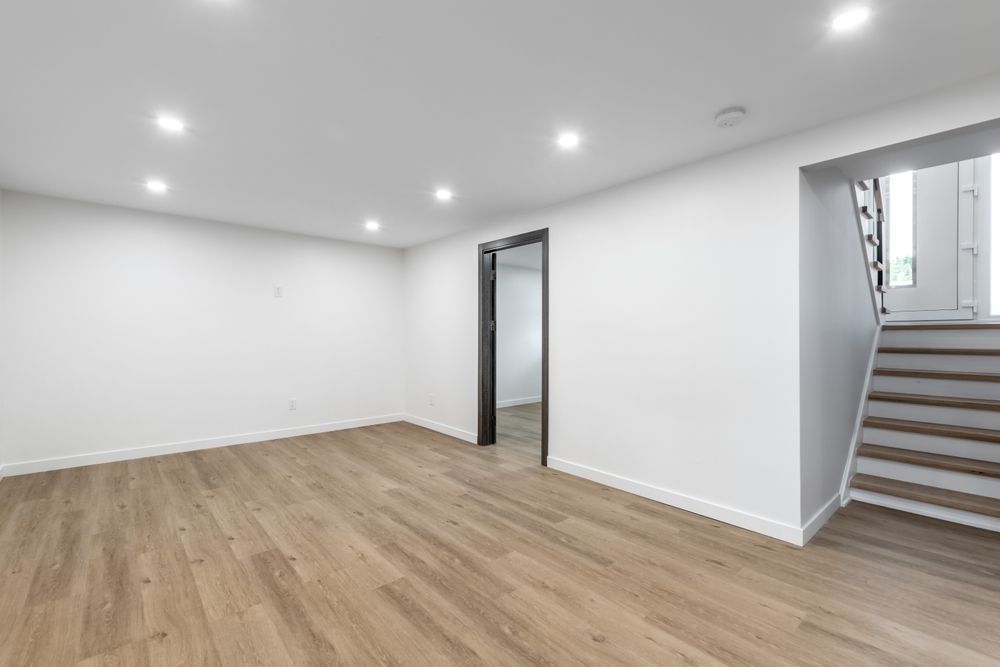
R & L Contractors coordinates the design and construction so that mechanical systems, structural requirements, and finish work align with how you plan to use each room. Once the work is complete, you have basement spaces with consistent temperatures year-round, flooring that remains dry and comfortable underfoot, and lighting that makes rooms feel welcoming rather than dim. Walls are finished smooth, doors operate without sticking on uneven floors, and trim work matches the quality found on upper levels. Storage solutions incorporate closets, built-in shelving, and utility areas that keep mechanicals accessible for maintenance while concealing equipment from view in finished rooms.
Moisture control prevents the musty odors and material deterioration that plague poorly finished basements. Foundation walls are insulated with materials that resist mold growth and do not lose R-value when humidity rises. Vapor barriers are positioned correctly relative to insulation and framing, and dehumidification is considered when natural ventilation cannot manage moisture loads. These measures address the unique conditions basements face, where concrete walls stay cool and humid air condenses on surfaces unless properly managed.
What Homeowners Want to Know About Finishing Basements
Basement projects involve structural considerations, moisture management, and decisions about how to maximize space within existing ceiling heights and window placements. These answers clarify common questions about converting unfinished areas into usable rooms.
What makes egress windows necessary in basement bedrooms?
Building codes require emergency exits and rescue access in sleeping areas, and egress windows meet those requirements when sized and installed correctly. Window wells must be deep enough to accommodate the window opening and wide enough for a person to climb through without obstruction.
How is moisture controlled in finished basements in Gillette?
Foundation walls are insulated with closed-cell foam or rigid panels that resist water vapor, and interior drainage systems or sump pumps manage groundwater when necessary. Dehumidifiers control humidity levels during summer months when cool concrete surfaces cause condensation.
Why does ceiling height matter for basement finishing?
Habitable rooms require minimum ceiling heights, typically seven feet for most areas and slightly less for obstructions like beams. Ducts, pipes, and wiring must be routed to preserve headroom or concealed in soffits that do not create oppressive low sections.
What flooring works best in basement spaces?
Engineered wood, luxury vinyl, and tile resist moisture better than solid hardwood or carpet directly on concrete. Subfloor systems create air gaps that allow vapor to dissipate and provide cushioning underfoot, making finished basements more comfortable than cold concrete slabs.
How does finishing a basement increase home value?
Added square footage in bedrooms, offices, or family rooms expands the functional space buyers consider when evaluating homes. Properly finished basements with egress windows and code-compliant construction appeal to buyers more than unfinished storage areas.
Basement finishing services from R & L Contractors transform unfinished areas into functional living spaces through code-compliant construction, moisture management, and layouts designed for long-term use. Contact our team to discuss basement remodeling options and review your property's specific conditions.